From Royal Palace to Museum: The Al Batha Museum of Islamic Arts in Fez, Morocco

by Ismail Rharib
Introduction
The Al-Batha Museum of Islamic Arts in Fez stands as one of the most prominent examples of the 'Museumification of Palaces' in Morocco — the transformation of private sultanic spaces into public knowledge-based institutions dedicated to preserving national memory and valorizing the Kingdom's tangible and intangible assets. Far from being merely a space for traditional museum display, the museum, through its architectural structure and scientific content, serves as a tool for interpreting the trajectories of governance and sovereignty in Moroccan history, and as a parallel instrument for cultural diplomacy that highlights the Kingdom's civilizational identity.
This report offers a systematic overview of the museum, beginning with the historical context of the building's inception, followed by the cultural philosophy underpinning its museological path, a detailed description of the major archaeological evidence and the craft and architectural display sections, and concluding with a practical guide for visitors.
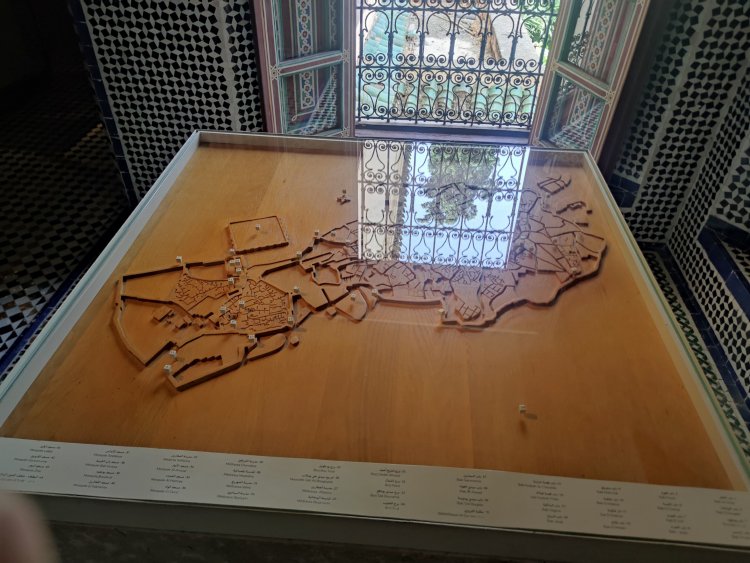
Wooden scale model of the old Fez medina, showing the museum's location within its historic urban fabric
Historical Context and Architectural Inception: The Strategy of Palace Museumification
The conversion of royal palaces into museum institutions represents a strategic vision aimed at shifting the sultanic space from the private sphere to the public intellectual domain, thereby serving the path of democratizing culture and safeguarding the nation's political memory. The Al-Batha Museum originated as a royal palace designated for receptions; its initial core was constructed during the reign of Sultan Moulay Hassan I (1873–1894), and its architectural features and ornamentation were completed during the reign of Sultan Moulay Abdelaziz in 1897.
This architectural monument spans a precise area of 7,320 square meters in the heart of the Idrisid capital, making it one of the largest museum structures in the ancient Medina. Within the framework of royal care for the heritage of old Fez, the museum benefited from a massive restoration and valorization project launched by King Mohammed VI in 2019. The philosophy of this restoration was centered on maintaining the building's original components, particularly the 19th-century Zellige (mosaic tilework), while employing modern techniques in what is known as 'Museum Scenography' to enhance the space's touristic and intellectual appeal.
Field observations indicate that this organic fusion between the authenticity of the structure and the significance of the displayed collections clearly embodies the paths of governance and sovereignty throughout Morocco's ancient history, where architectural form is inseparable from the historical content it carries.
Cultural Philosophy and Civilizational Message: The Museum as a Diplomatic Tool
According to the organization of its museological path, the Al-Batha Museum functions as a platform for cultural diplomacy, providing a profound reading of the concept of 'Islam of Tolerance' and the peaceful coexistence that has characterized the Moroccan personality throughout history. This philosophy is manifested through physical evidence documenting the historical harmony between Islam, Judaism, and Christianity under the umbrella of Moroccan sovereignty — a message the museum clearly endeavors to highlight to the visitor.
Furthermore, the museum provides tangible evidence of Morocco's pioneering role as a bridge to Southern Europe. Its collections include pieces such as the historical 'Portuguese Mortar' and Roman inscriptions brought from the archaeological site of Volubilis. These pieces document the ancient civilizational and commercial exchanges that linked Morocco with Spain and Portugal over successive centuries. From this perspective, the museum is presented as a unique model for showcasing values of peace and human dialogue, rather than just a space for displaying artifacts isolated from their historical context.
This pluralistic philosophy is tangibly reflected within the exhibition halls, which follow a precise chronological path, gradually leading the visitor from the region's ancient roots to the formation of the Moroccan state in its current form.
Chronological Periodization and Major Archaeological Evidence
The museum display at Al-Batha adopts a 'Chronological Periodization' methodology to facilitate the visitor's understanding of the historical evolution of the Moroccan state. The exhibits are distributed across eleven thematic axes covering various aspects of art, science, and history. The following are the most prominent chronological artifacts observed during the field tour:
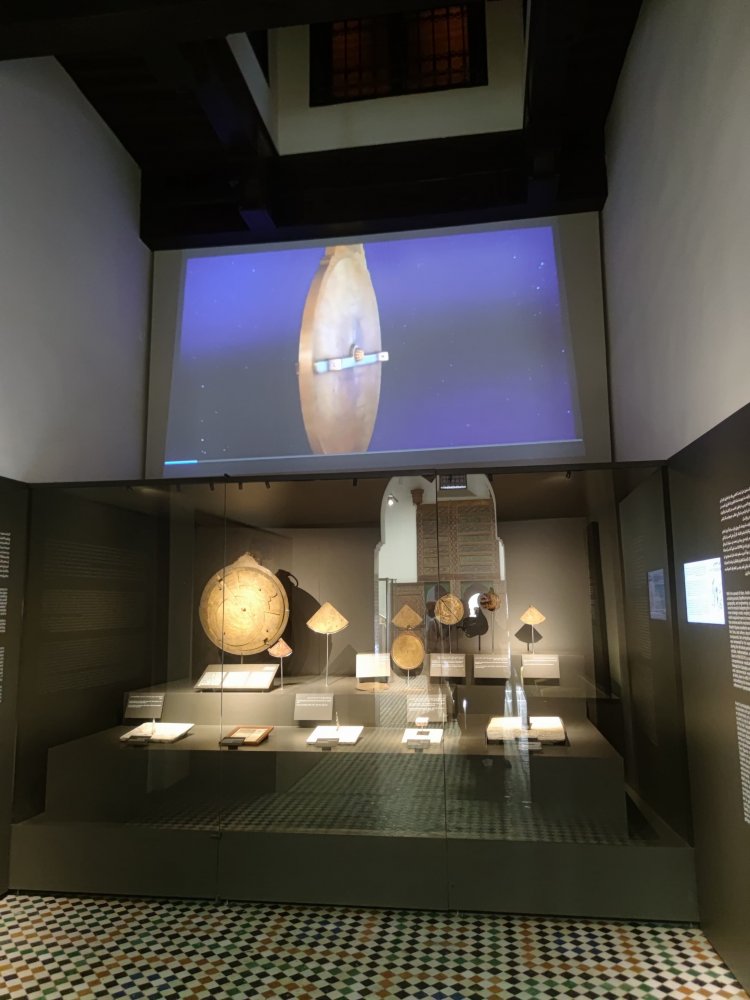
Hall of astronomical instruments: astrolabes and sundials illustrating Moroccan scholars' contributions to astronomy
The Map of Al-Sharif Al-Idrisi
Among the most valuable pieces displayed is the map of Al-Sharif Al-Idrisi, which is considered — according to the accompanying data — one of the earliest accurate geographical maps in human history. It is presented to the visitor as the jewel of the museum's collections and evidence of Moroccan scientific leadership in the field of geography and cartography.
The Oldest Minbar in the World
This carved wooden minbar (pulpit) dates back to the 10th century AD. According to the accompanying museological narrative, it represents the pinnacle of religious architectural creativity of that era. It is one of the pieces that captivates visitors due to the precision of its carving and its exceptional historical antiquity.
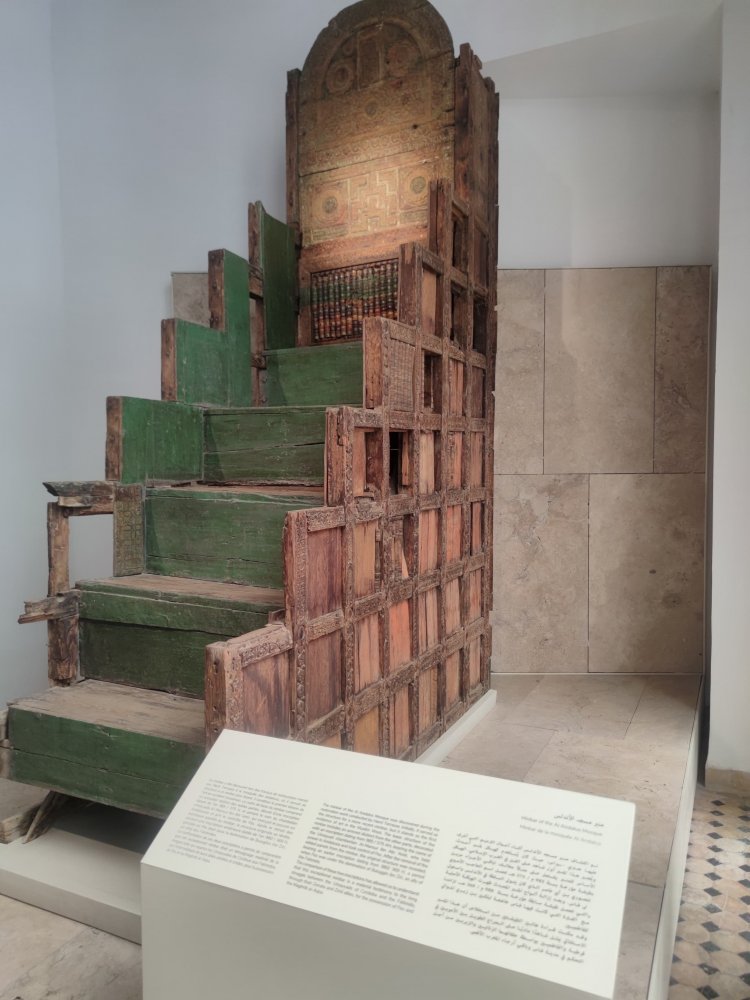
Minbar of the Al-Andalus Mosque, 10th century AD — the oldest minbar on display in the museum
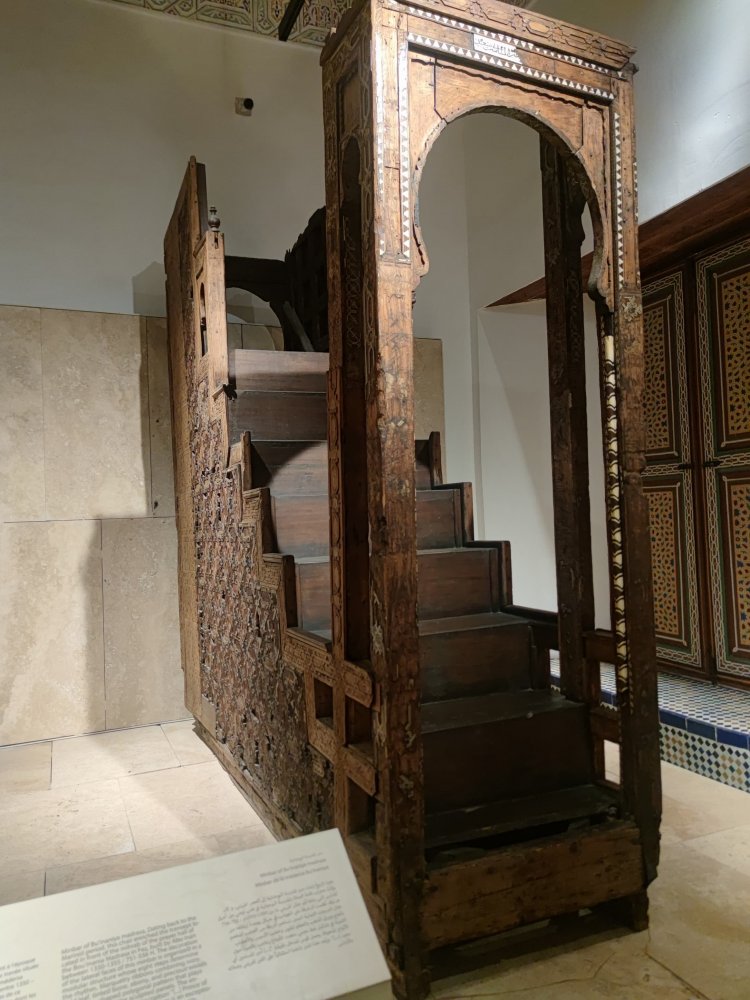
Side view of the minbar's staircase, with its fine carved woodwork and surviving original pigments
Political and Economic Evidence
This collection includes 'Fez Currencies' (historical coins), alongside archaeological finds from the city of Sijilmasa and a unique military piece known as 'Al-Mudammir' (The Destroyer). Together, these elements constitute documentation of the political, economic, and military dimensions of the region's history.
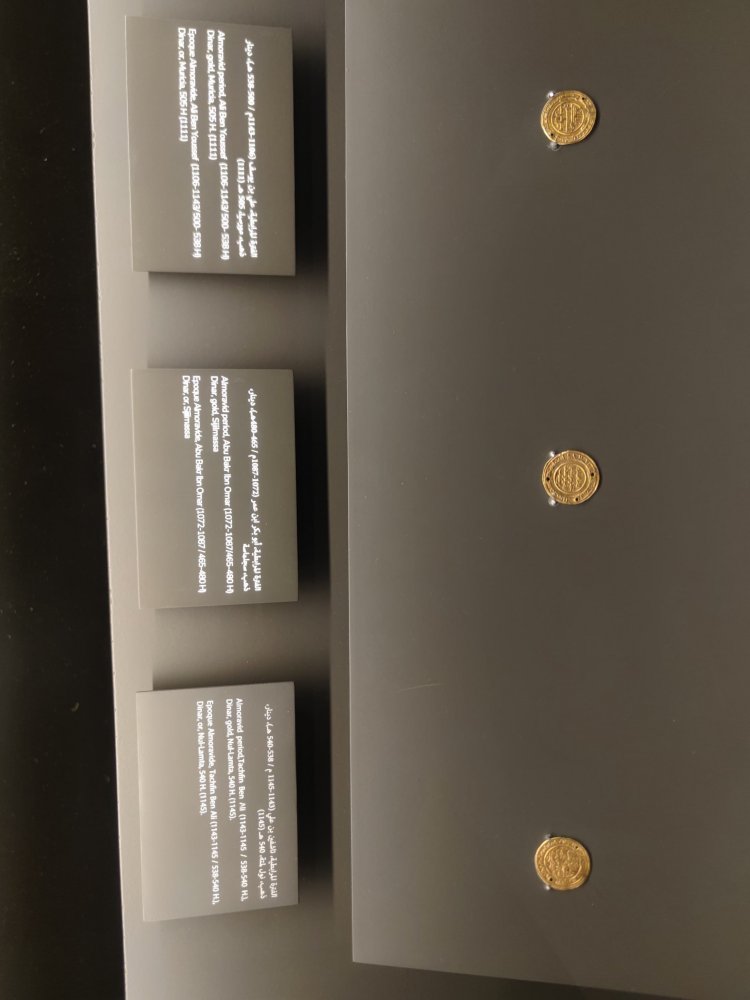
Gold dinars from the Almoravid era, evidence of the economic prosperity of that period
Historical Narrative Scheme
This section includes illustrative maps of the Idrisid state and drawings narrating the history of Islam in Morocco, starting from the Prophetic Hijra, through the arrival of Uqba ibn Nafi, and the founding of the Moroccan state. This provides the visitor with a sequential narrative framework linking major events with the displayed physical artifacts.
Civilizational Diversity
This axis includes exhibits from the Roman period, along with pieces highlighting the depth of Amazigh culture, leading up to evidence from the Alaouite era. This embodies the accumulation of successive civilizational layers in the region before and after the palace's inception.
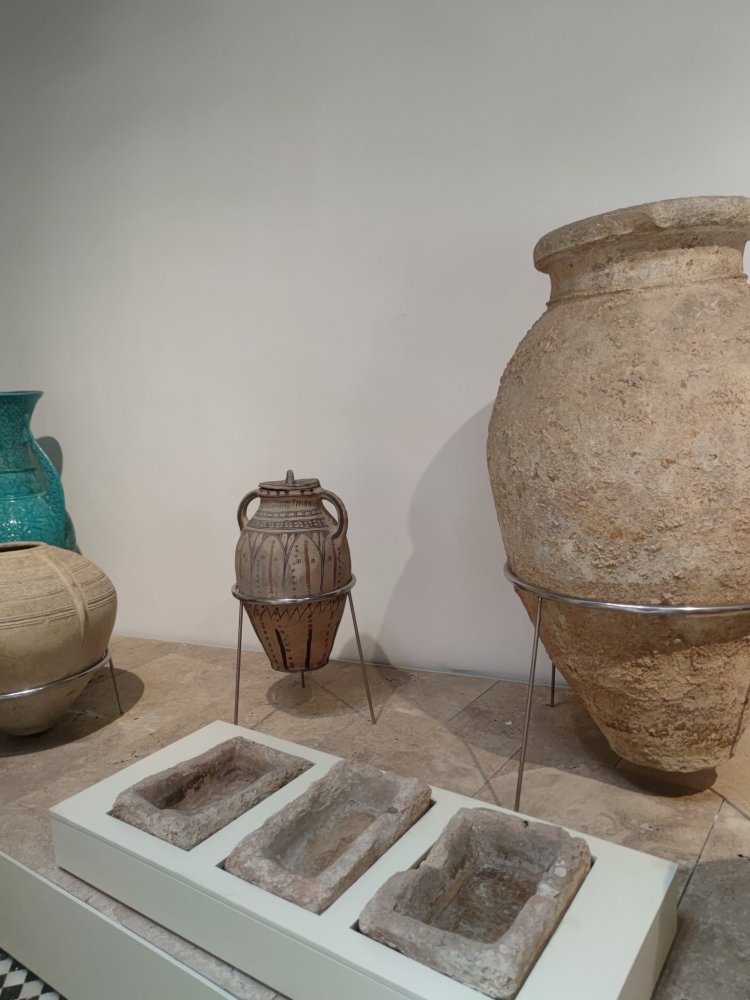
Roman-period earthenware vessels alongside ancient stone basins
This transition from the grand historical narrative to fine professional details leads the visitor toward exploring the genius of the Moroccan artisan — a theme to which the museum dedicates a significant portion of its intellectual path.
Craftsmanship and Applied Arts: Safeguarding Intangible Heritage
The handicrafts displayed in the Al-Batha Museum are classified as part of the 'Intangible Heritage' that requires an analytical reading of the traditional artisan's intelligence. Despite the simplicity of the tools used historically, the 'complexity' of the final product stands as tangible proof of inherited professional competence.
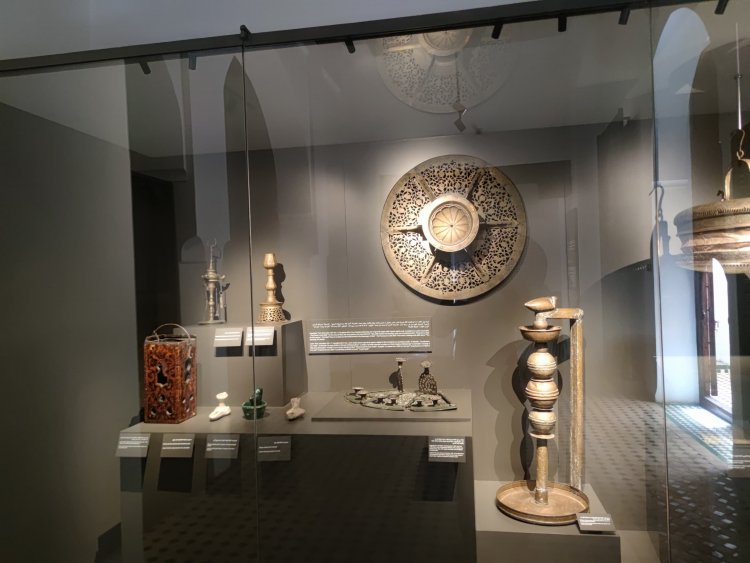
Traditional copper and metal work: candle holders, incense burners, and pierced decorative pieces
Knowledge Transfer
The museum utilizes explanatory videos illustrating the stages of Zellige production from start to finish. This educational tool aims to safeguard the craft from extinction and introduce the visitor — especially foreigners — to the precision of this art and the complexity of its execution stages.
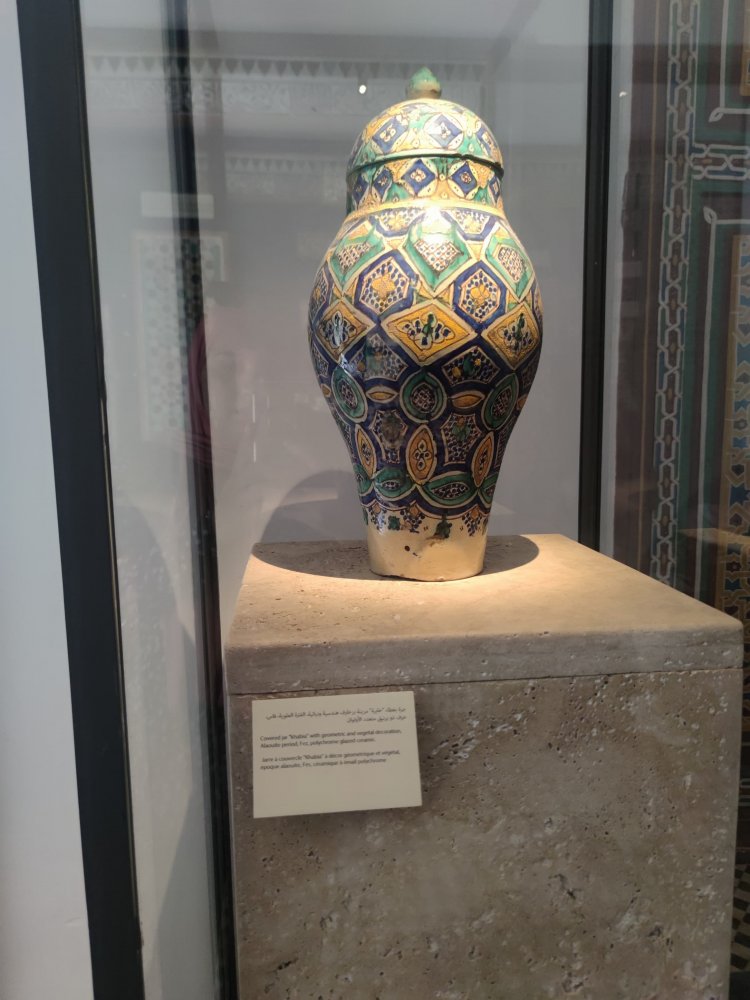
Covered ceramic jar 'khabia' with geometric and floral decoration, Alaouite period, polychrome glazed ware
Textiles and Adornment
The museum houses a living archive of traditional costumes, including ancient Moroccan Caftans and fine 'Brocade' fabrics, alongside carpets representing various Moroccan regions with their contrasting patterns and colors.
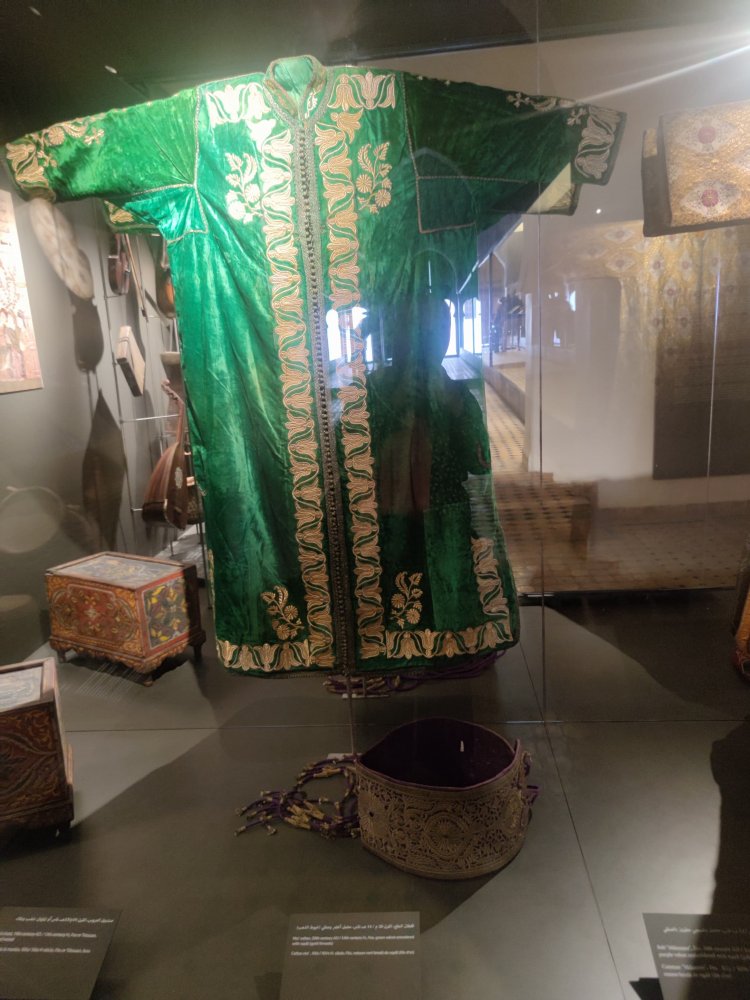
'Ntaa' caftan, 14th century H., green velvet embroidered with gold thread (sqalli)
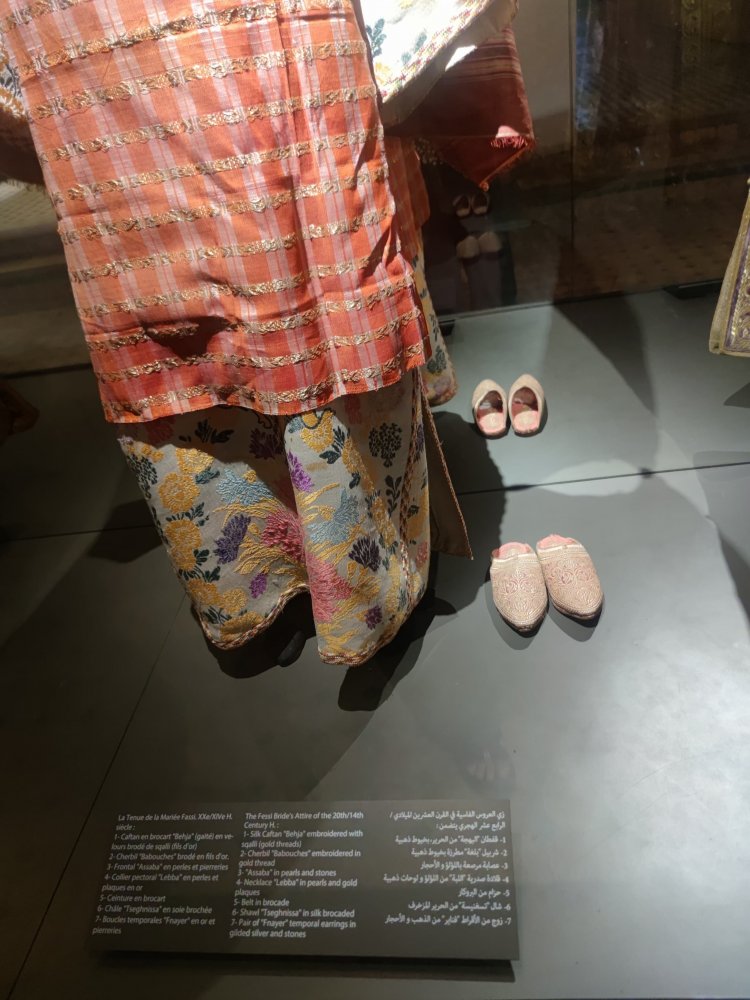
The Fessi bride's attire in detail: embroidered caftan, cherbil, and gilded babouches
Jewelry and Implements
Exhibits in this axis include intricately crafted traditional jewelry, bridal chests known as 'Marshat,' and ancient craft tools reflecting the development of artisanal production implements through successive ages.
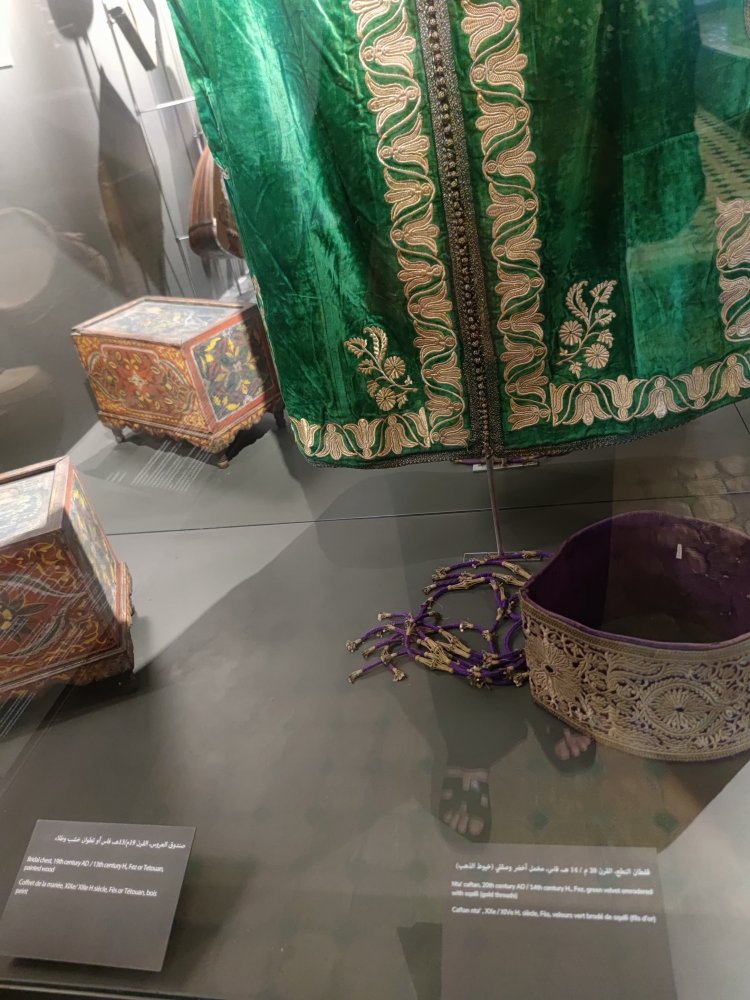
A decorated wooden bridal chest alongside an embroidered caftan and traditional jewelry
The observed precision of craftsmanship within these halls is complemented by the geometric beauty of the surrounding open spaces, giving the museum its integrated visual identity.
Spatial Engineering and Andalusian Aesthetics
The Moroccan-Andalusian garden within the Al-Batha Museum represents a functional and strategic element in sultanic architecture. Originally designed to achieve ecological and psychological balance for the palace residents, it now provides visitors with a sense of serenity that allows for reflection on the surrounding architectural details.
Moroccan ingenuity is clearly evident in the massive wooden doors adorned with fine carvings and the stucco decorations (Naqsh bi-l-jibs) above the water fountains in the courtyards. Together, these elements form a visual and auditory symphony that attracts visitors from all over the world, granting the visit a sensory dimension that transcends the mere viewing of collections displayed in closed halls.
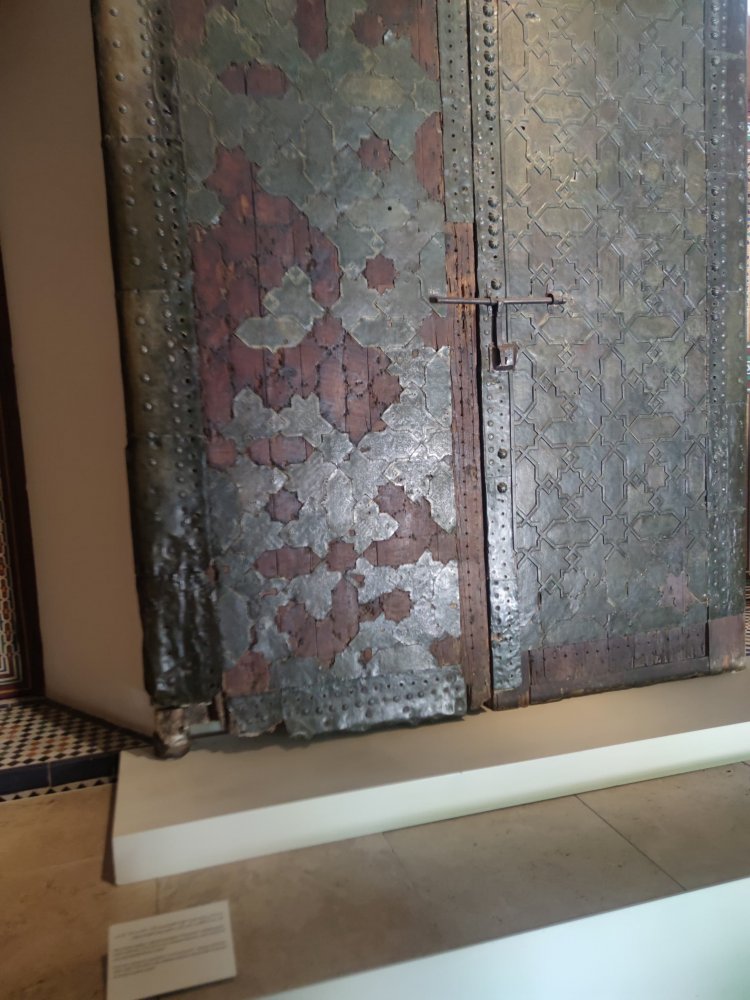
Detail of a traditional door clad in metal panels engraved with interlacing geometric patterns
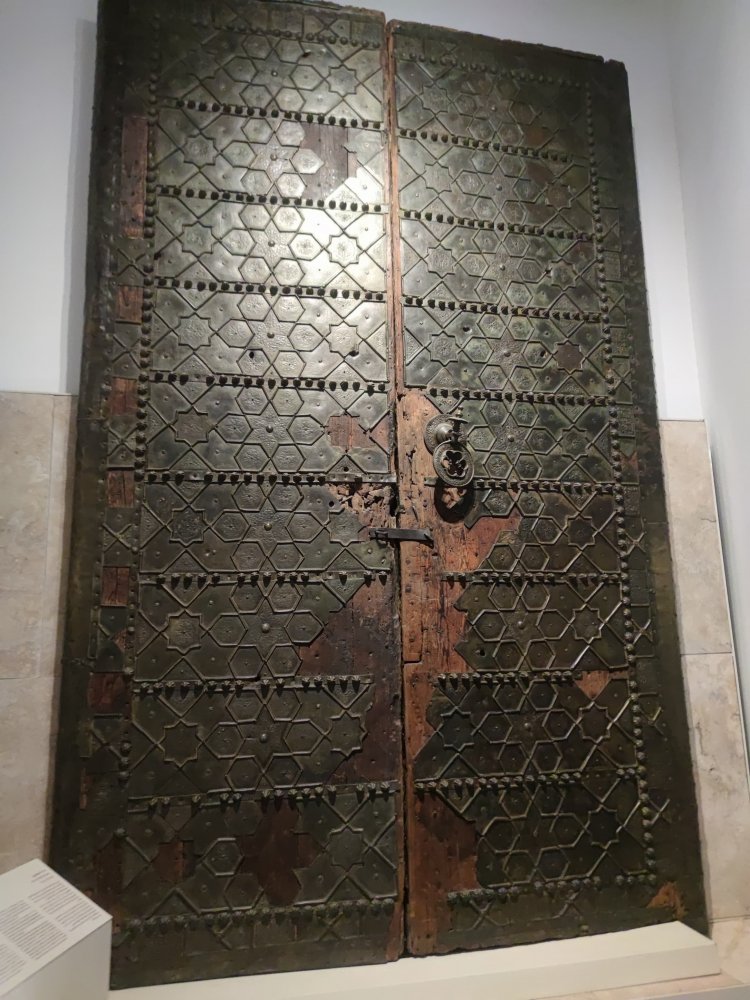
The main door clad in star-patterned engraved metal, an example of traditional Fessi ironwork
Practical Guide and Logistical Instructions for the Visit
To ensure visitor flow and maximize the intellectual benefit of the visit — especially with the museum's commitment to providing introductory content in different languages — the following practical data observed during the visit should be noted:
Location and Access
The museum is located near the walls of the ancient Medina of Fez. Visitors can park their cars in the nearby parking lot and then walk approximately 300 meters to reach the museum's main entrance.
Opening Hours
The museum is open to visitors daily from 10:00 AM to 6:00 PM, except for Tuesdays, when it is closed.
Entrance Fees and Cultural Support Initiatives
The entrance fee on regular days is 30 MAD for the general public, which includes a full tour of all halls and the garden. Every Friday, entrance is free for Moroccan citizens as part of a national initiative aimed at encouraging domestic tourism and strengthening the citizen's connection to their civilizational heritage. Students are also admitted free of charge upon presentation of a valid student ID.
Conclusion
This field visit concludes that the Al-Batha Museum of Islamic Arts serves as a living witness to the greatness of the Moroccan state and its historical ability to combine political firmness with aesthetic prosperity. From its inception as a royal palace to its transformation — following the restoration project launched by King Mohammed VI in 2019 — into a specialized museum space adopting chronological periodization and its eleven axes, the museum emerges as an integrated model combining architectural evidence, scientific content, and a cultural diplomatic message.
A visit to the museum remains an experience that transcends the boundaries of a transient tourist excursion, becoming a journey into the depths of Moroccan national identity and an opportunity to closely observe a civilizational legacy that, through the precision of its craft and the depth of its message of tolerance, remains a source of inspiration worthy of documentation and careful study.